
Plastic materials play a crucial role in modern manufacturing. Among the most widely used thermoplastics in consumer and industrial products are PET (Polyethylene Terephthalate) and PP (Polypropylene). Although both are versatile polymers, they differ significantly in structure, performance, processing, sustainability, and typical applications. Understanding these differences helps product designers, manufacturers, and even consumers make better material decisions.
This article explains PET vs. PP from five practical perspectives:
✔ Material structure & basic properties
✔ Mechanical & thermal performance
✔ Chemical and barrier behavior
✔ Processing compatibility
✔ Sustainability and recycling
✔ Applications and cost
1️⃣ Material Structure & Basic Properties
| Property | PET | PP |
|---|---|---|
| Polymer type | Polyester | Polyolefin |
| Transparency | Excellent | Translucent to opaque |
| Density | Higher (1.34–1.40 g/cm³) | Lower (0.90–0.91 g/cm³) |
| Feel | Rigid, smooth | Lightweight, slightly waxy |
| Flame behavior | Burns slowly | Burns easily |
Key Takeaway:
PET offers a more premium, rigid and glass-like appearance, while PP is lighter and more flexible.
2️⃣ Mechanical Strength & Heat Resistance
Mechanical strength
-
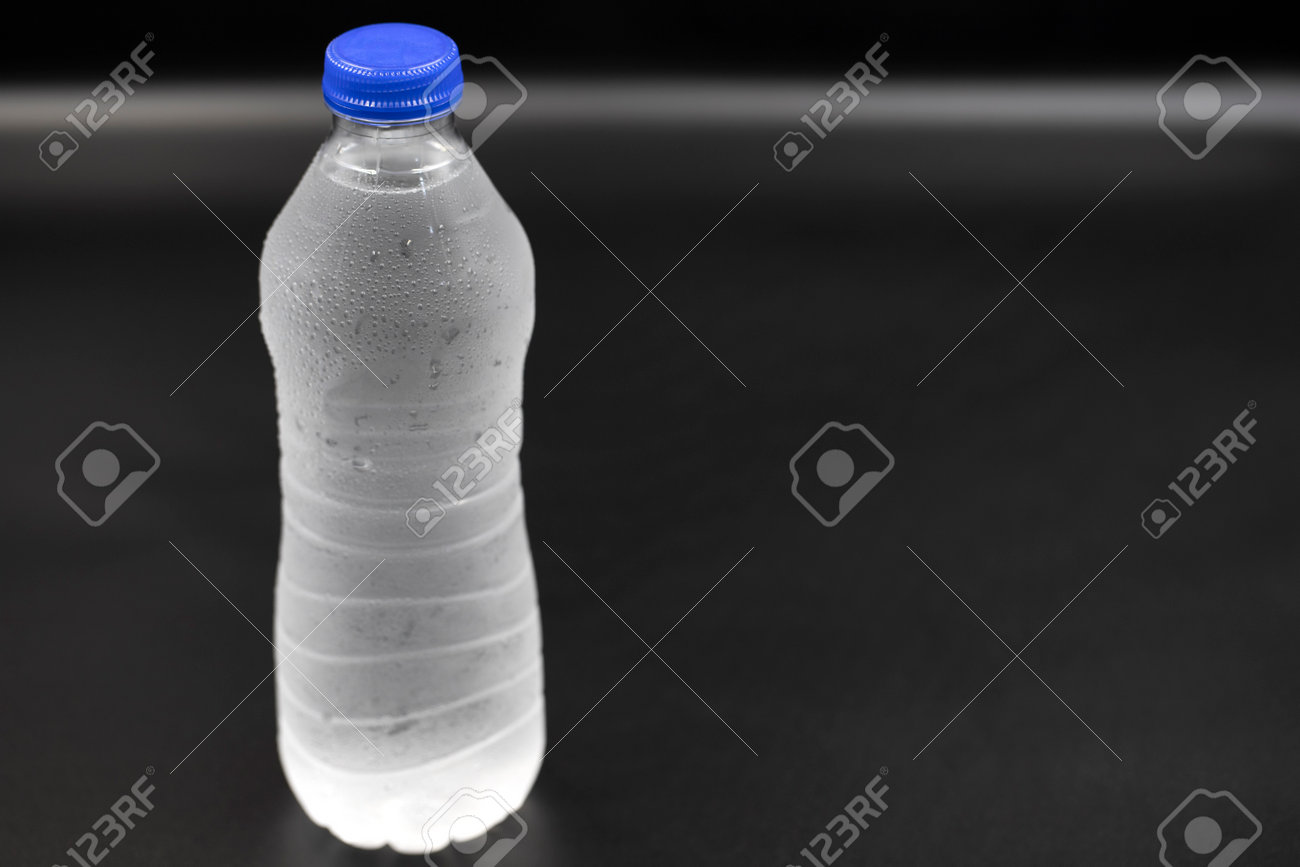
PET has higher tensile strength, making it ideal for pressurized containers like carbonated beverage bottles.
-
PP is more flexible and fatigue-resistant, suitable for hinges or reusable containers.
Heat resistance
| Item | PET | PP |
|---|---|---|
| Heat deflection temperature | ~70–80°C | ~100–120°C |
| Microwave safe | Usually no | Yes (most grades) |
| Dishwasher safe | Often limited | Generally safe |
Key Takeaway:
PP handles heat better, while PET performs better under mechanical stress and pressure.
3️⃣ Barrier & Chemical Resistance
| Performance | PET | PP |
|---|---|---|
| Water vapor barrier | Average | Good |
| Oxygen barrier | Excellent | Poor |
| Chemical resistance | Moderate | Excellent (acids, bases) |
This explains why PET is widely used in bottled beverages, where oxygen protection is essential to maintain freshness, while PP is more common in packaging that requires resistance to strong chemicals or oils.
4️⃣ Processing, Forming, and Cost
| Feature | PET | PP |
|---|---|---|
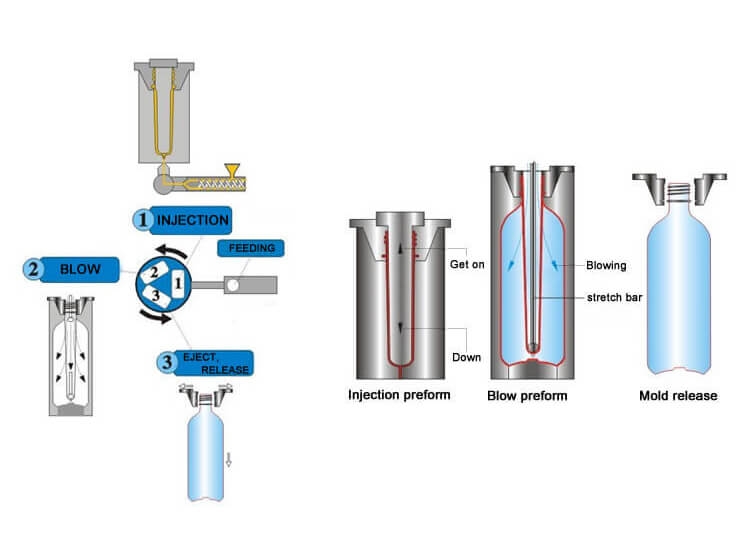
| Processing methods | Injection molding, Stretch blow molding | Injection molding, Extrusion, Film blowing |
| Crystallinity behavior | Can be semi-crystalline after orientation | Semi-crystalline |
| Cost | Slightly higher | Lower and more economical |
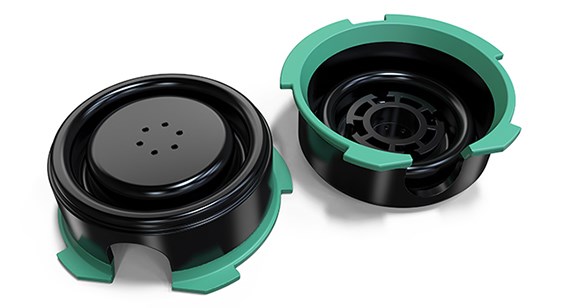
PP is easier and cheaper to process into diverse shapes, while PET is preferred for transparent, high-clarity packaging that offers a more premium look.
5️⃣ Sustainability & Recycling
| Topic | PET | PP |
|---|---|---|
| Recyclability | Widely recycled: Resin code #1 | Recyclable but less common: Resin code #5 |
| Global recycling infrastructure | Mature | Improving but still limited |
| Recyclate applications | Bottles → bottles or fibers | Food contact recycling still limited in many regions |
PET is the most recycled plastic in the world thanks to its value and well-established collection system. PP recycling infrastructure is catching up, and demand for PP recyclate is rising in automotive and household goods.
6️⃣ Common Applications Comparison
| Application Area | PET | PP |
|---|---|---|
| Beverage bottles | ✅ | ❌ |
| Food storage & microwave containers | ⚠ Limited | ✅ Best option |
| Packaging films | ✅ Excellent clarity | ✅ Good cost/performance |
| Medical devices | ✅ Clean & strong | ✅ Sterilization capability |
| Automotive parts | ❌ Rare | ✅ Widely used |
| Textiles (fibers) | ✅ PET → Polyester | ❌ Not common |
Summary: Which One Should You Choose?
| If You Need… | Better Choice |
|---|---|
| High clarity and premium look | PET |
| High rigidity for pressurized liquids | PET |
| Low density & lightweight design | PP |
| Microwave/heat resistance | PP |
| Chemical resistance | PP |
| Strong global recycling system | PET |
Bottom Line:
Choose PET for beverages and transparent, high-strength packaging.
Choose PP for reusable food containers, medical supplies, caps, and lightweight industrial components.
Final Thoughts
Both PET and PP hold significant importance in packaging, manufacturing, and industrial sectors. They are affordable, versatile, and recyclable, making them essential to the circular plastic economy. The right choice depends on your product’s performance needs and sustainability goals.